
Why Pre-Sports Physicals, ECGs and AEDs Are Game-Changers for Young Athletes

BREVARD COUNTY • ROCKLEDGE, FLORIDA — As football training begins across Brevard County and student-athletes lace up for another fall season, one Health First cardiologist is urging families to focus on a different kind of preparation — the kind that could save lives.
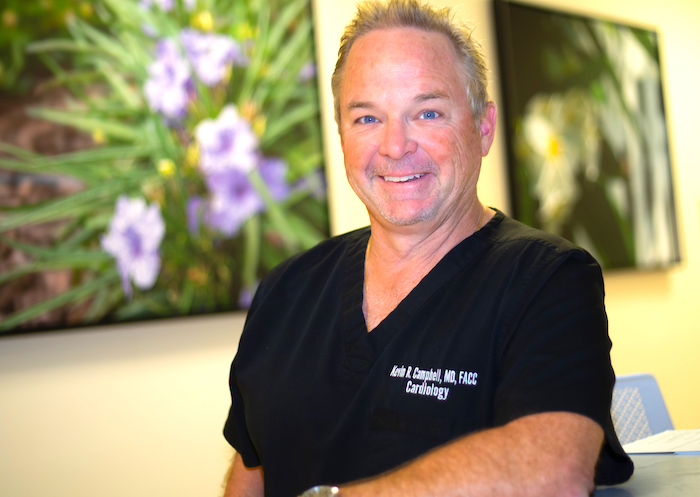
Dr. Kevin Campbell, MD, FACC, MBA, says pre-participation physicals, ECGs, and AED access are essential tools in preventing sudden cardiac events in young athletes.
While these incidents are rare — with fewer than 2,000 deaths annually in individuals under 25 — they are often preventable with the right screening and awareness.
Many local schools, including Brevard County Public Schools, already require pre-participation physicals and ECGs, and Campbell says that’s a critical first step.
These exams assess a student’s medical history and include a physical to identify any warning signs. One of the most important additions to that screening process is the electrocardiogram, or ECG.
“There’s a great organization here in Brevard County — called Who We Play For, and they are absolutely committed to making sure every student-athlete gets an ECG,” said Campbell.
Health First and Who We Play For are proud community partners, working together to help prevent sudden cardiac death in youth through early detection. In June, Health First held another successful sports physical clinic for Brevard Public Schools athletes, providing electrocardiograms (ECGs) as part of the screening process.
This ongoing collaboration helps ensure student-athletes are properly screened before the season begins, supporting safer participation in school sports.
An ECG offers a quick snapshot of the heart’s electrical activity and can detect abnormalities like hypertrophic cardiomyopathy (a thickened heart muscle), long QT syndrome, or Brugada syndrome (and others) — all of which can increase the risk of sudden cardiac death. These conditions often have no obvious symptoms but can be picked up through proper testing.
“There are serious heart conditions that don’t always present themselves until it’s too late,” Campbell said. “That’s why a thorough screening — including an ECG — is so important.”
Some symptoms, however, should never be ignored. Campbell encourages families to look out for signs like frequent shortness of breath during minimal activity, trouble keeping up with teammates, episodes of dizziness or fainting and fast or irregular heartbeats.
These red flags may be subtle but should prompt a visit to a family doctor or cardiologist. Additionally, any family history of sudden death or death of a young family member should be reported to the student’s physician as part of the history and physical exam process.
While ECGs are an effective first step, Campbell says echocardiograms — ultrasound imaging of the heart — are often the next course of action if something seems off during a physical exam or ECG.
Though not routinely required in the U.S., they are standard in Europe and offer a comprehensive look at heart structure and function, from valve performance to congenital defects.
“In many cases, an echocardiogram can give us clear answers and peace of mind,” he explained.
Importantly, discovering a heart condition does not automatically disqualify a student from participating in sports. Campbell, who previously treated professional athletes during his time at Duke University, has seen firsthand how athletes with heart conditions can safely compete with proper guidance and care.
“Just because we find something doesn’t mean you can’t play,” he said. “It means we evaluate, manage and make sure it’s safe.”
Equally vital to prevention is preparation on the field. Campbell strongly advocates for the presence of automated external defibrillators (AEDs) at every practice and game — available to all.

AEDs are designed to be incredibly easy to use. Once powered on, they provide voice prompts guiding the user step by step — from pad placement to delivering a shock, if needed. The device will not deliver a shock unless it detects a rhythm that requires one, making it safe even for those without formal medical training.
“You can’t do it wrong, and you’re protected under Good Samaritan laws when you try to help,” Campbell said. Most importantly, you could save a person’s life.
Cardiac arrest survival outside of a hospital depends heavily on rapid defibrillation. Without it, outcomes are grim. That’s why Campbell keeps an AED on his boat, another at home, and gave one to his parents as a gift.
“Having an AED that no one can find, or one that isn’t functional, is the same as not having one at all,” he said. “Check the batteries. Check the pads. Know where it is.”
Moreover, Campbell says that every coach and every member of the school’s faculty and staff should have direct knowledge of the locations of AEDs. AEDs should be present at EVERY practice, every game and readily available on the field or court.
As Florida’s heat and humidity add another layer of risk to fall practices, Campbell also warns parents and coaches about hydration. He recommends students begin drinking water the night before practice to stay ahead of dehydration. Sports drinks are fine in moderation, but sugary options should be limited — and energy drinks, he said, should be avoided completely due to dangerously high caffeine content.
In the end, it all comes down to awareness, preparation, and prevention.
“If I had one message for parents, it’s this: Make sure your child has a history, physical exam and ECG before they start sports,” Campbell said. “If anything seems off, your doctor may recommend an echocardiogram. These screenings are simple and they can be lifesaving.”
And when it comes to readiness on the sidelines, Campbell is clear: AEDs aren’t optional.
“Every single facility needs to have an AED readily accessible,” he said. “Because if the worst happens, that device — and knowing how to use it — could be what saves someone’s life.”
 Related Story:
HOT OFF THE PRESS! July 14, 2025 Space Coast Daily News – Brevard County’s Best Newspaper
The post Health First Cardiologist Urges Families to Prioritize Heart Screenings Before Prep Football Season Kicks Off appeared first on Space Coast Daily.