
New technology helps patients begin treatment sooner, reduces stress of waiting for results

 Related Story:
All Four Health First Hospitals Earn CAP Re-Accreditation, Highlighting Excellence in Laboratory Medicine
BREVARD COUNTY, FLORIDA — In today’s rapidly evolving healthcare landscape, technology plays a critical role in improving diagnostic accuracy and patient outcomes.
One of the most transformative advances is digital pathology, which is reshaping how diagnoses are made and how patients experience care.
At Health First, this innovation is being brought to life through partners like NextGen Pathology, delivering precise, timely, and collaborative diagnostic services to the Space Coast community and beyond.
For patients, the impact is immediate and deeply personal. Waiting for test results can be one of the most stressful parts of the diagnostic journey, particularly when serious or life-threatening conditions are involved. Digital pathology helps ease that uncertainty by enabling faster, more accurate diagnoses, allowing patients and families to move forward with clearer information and greater confidence.
Health First operates one of the region’s most advanced laboratory networks, spanning 17 locations and processing nearly 8 million tests each year. From routine lab work to rare and complex cases, digital pathology allows clinicians to access high-quality diagnostic information more quickly.
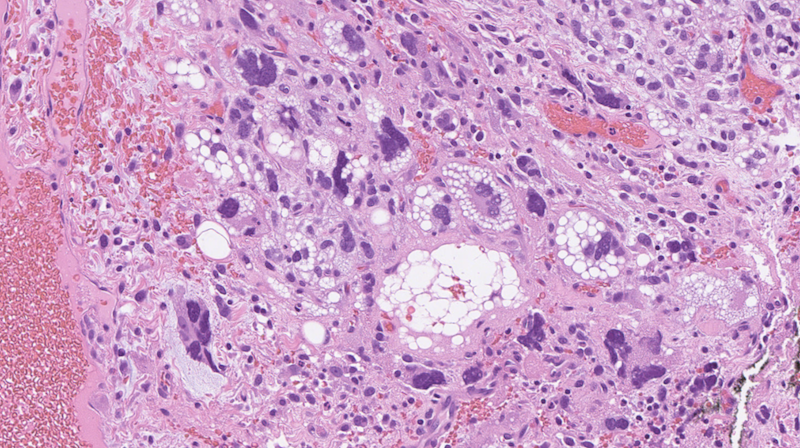
This means patients can begin treatment sooner, avoid unnecessary travel to distant specialty centers, and experience greater peace of mind throughout their care.
That speed and precision are not theoretical — they are already changing outcomes for patients.
One powerful example involved a patient who discovered an unusual lump. An initial biopsy revealed a high-grade sarcoma, a malignant soft tissue tumor requiring urgent and highly specific diagnosis.
Traditionally, confirming the exact tumor type can take one to two weeks, involving multiple rounds of testing and shipping tissue slides to academic centers for expert review. For patients, those delays can be frightening and disruptive.
With digital pathology, Health First completed the diagnostic process in several days, enabling the patient to begin treatment immediately and with confidence in the accuracy of the diagnosis.
The case was handled by a team of expert pathologists, including Dr. Hadi Yaziji, MD, FCAP, FASCP, a Health First physician specializing in lab histology and cytology. Utilizing digital scanners to create high-resolution images of the tissue samples, pathologists were able to share these images instantly with specialists across the globe.
In this case, the team included pathologists from Arizona, Montreal, and Harvard University.
“Without digital pathology, this case could have taken weeks,” Yaziji said, explaining that by digitizing the slides and sharing them with experts remotely, the team was able to collaborate effectively and reach a definitive diagnosis much faster.
He said digital pathology breaks down traditional barriers of distance, bringing the expertise of world-renowned pathologists directly to patients in Brevard County.
“Using digital pathology along with image analysis allows us to consult on difficult cases much more seamlessly and efficiently, regardless of geography,” said Robert Huberman, M.D., medical director of laboratory medicine and pathology at Health First Holmes Regional Medical Center (HRMC).
“It frees us to read cases in any location and at any time.”

Precision is another critical advantage of digital pathology, particularly in cancer care. Mavis P. Masuecos, system director of laboratory medicine and pathology at Health First, highlighted how the technology is transforming breast cancer diagnostics.
“Health First Laboratory Medicine & Pathology uses the Roche VENTANA DP 200 scanner and the NAVIFY cloud system for every breast cancer case we review,” Masuecos said.
“These tools create high-resolution digital images of entire tissue slides and use artificial intelligence algorithms to measure the three most important breast cancer markers — ER, PR and HER2 — in more than 300 complex cancer cases each year.”
He emphasized that the result is greater consistency, clarity and diagnostic confidence for pathologists and patients alike.
“This means every patient receives the most accurate information possible to choose the right treatment,” Masuecos said. “And we’re not stopping here — our team continues to evaluate new best-practice technologies to further advance our laboratory and pathology services.”
For patients facing complex cancer diagnoses, that level of precision allows physicians to personalize treatment plans with confidence. Delia Smith, M.D., staff pathologist at Health First, sees the difference firsthand.
“Digital pathology and AI algorithmic technology allows me to evaluate and score breast cancers easily with accurate results,” Smith said.
Beyond accuracy, digital pathology is also improving efficiency and accessibility.
Michele Beam, director of laboratory services at HRMC, explained that Health First plans to digitize most pathology slide images and integrate them into the Epic electronic health record.
This allows test results to be accessed more easily by care teams and shared seamlessly with treating physicians.
These workflow improvements also support the people behind the scenes. Sloan Willis, supervisor at Health First Pathology, noted that streamlined processes help reduce staff burnout, allowing laboratory professionals to focus more time and attention on patients and communication.
We’re excited to put this advanced technology in the hands of our pathology clinicians,” said Michael Carr, chief information officer at Health First.
“Faster and more accurate diagnoses allow Health First to provide the best care experience without having to leave our community.”

For families, this translates into receiving critical information sooner, reducing uncertainty, and making timely decisions about care and treatment.
Digital pathology also connects patients to a broader network of expertise.
Complex cases can be reviewed by specialists anywhere in the world without patients needing to travel, ensuring access to top-level diagnostic insight while remaining close to home — an important benefit for those undergoing ongoing treatment or managing multiple health conditions.
This commitment to innovation aligns with Health First’s broader mission to maintain the highest standards of care.
Earlier this year, all four Health First hospital laboratories earned re-accreditation from the College of American Pathologists, a distinction that reflects the expertise, precision, and dedication of its laboratory professionals. CAP accreditation assures patients that every test meets rigorous national quality standards.
Digital pathology is transforming modern medicine by enhancing diagnostic accuracy, improving collaboration, and supporting better patient experiences. By embedding this technology into daily practice, Health First is raising the standard of care across its network and contributing to advancements in diagnostic medicine.
With a skilled team of approximately 450 scientists and advanced digital pathology capabilities, Health First continues to improve diagnostic speed and accuracy throughout the region — helping patients begin treatment sooner and supporting physicians with timely, expert insights when they matter most.
 Related Story:
HOT OFF THE PRESS! December 22, 2025 Space Coast Daily News – Brevard County’s Best Newspaper
The post New Technology Featuring Digital Pathology Speeds Critical Diagnoses at Health First appeared first on Space Coast Daily.