
Will be first crewed mission to orbit the moon since Apollo 17 in 1972
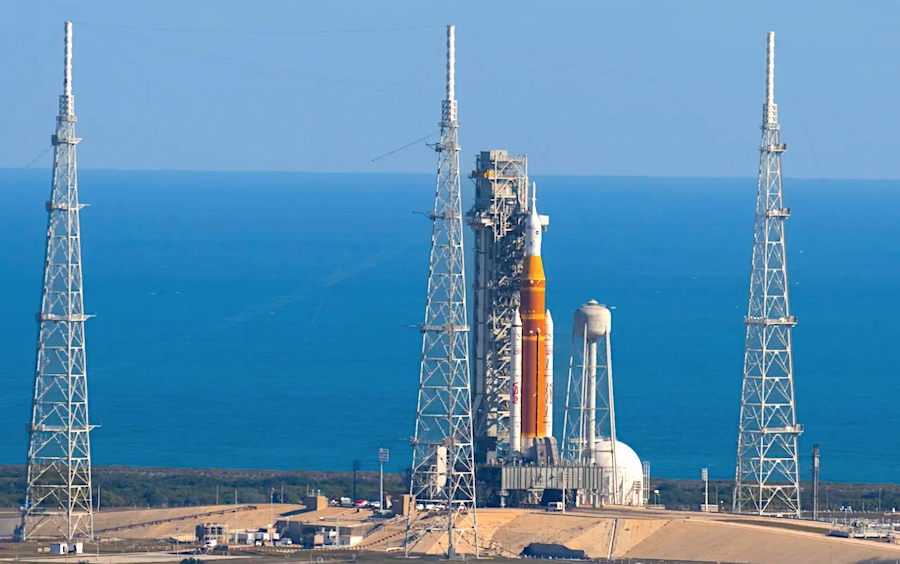
WATCH: This live feed from Kennedy Space Center in Brevard County provides continuous views of the Artemis II Moon rocket on Launch Pad 39B. Engineers have already powered up key elements of the massive rocket, including the interim cryogenic propulsion stage and the core stage — the central backbone of the 322-foot-tall vehicle. During the rehearsal, teams plan to load more than 700,000 gallons of super-cold liquid hydrogen and liquid oxygen into the rocket’s tanks.

The opening of a simulated launch window during the wet dress rehearsal begins at 9 p.m. EST, Feb. 2, with the countdown beginning approximately 49 hours prior. NASA will continue to assess weather conditions ahead of the test.
BREVARD COUNTY • KENNEDY SPACE CENTER, FLORIDA — NASA has officially started the clock on one of the most important milestones remaining before the Artemis II mission, initiating a full-scale countdown sequence for a critical fueling and launch rehearsal of the Space Launch System (SLS) rocket at Kennedy Space Center.
The test, known as a wet dress rehearsal, simulates nearly every step of launch day, from powering up flight systems to loading the rocket with cryogenic propellants and running through terminal countdown procedures.
If successful, it will clear a major hurdle toward launching the first crewed mission to orbit the moon since Apollo 17 in 1972.
NASA began the 49-hour countdown Saturday evening, aiming for a simulated liftoff time of 9 p.m. EST Monday, Feb. 2, at Launch Complex 39B. The rehearsal is expected to continue into the early hours of Tuesday.

Engineers have already powered up key elements of the massive rocket, including the interim cryogenic propulsion stage and the core stage — the central backbone of the 322-foot-tall vehicle. During the rehearsal, teams plan to load more than 700,000 gallons of super-cold liquid hydrogen and liquid oxygen into the rocket’s tanks.
NASA officials say the test will proceed through a series of propellant-loading milestones, including filling, topping off, and replenishing the tanks, followed by a countdown sequence and a demonstration of the ability to pause and recycle the clock. The tanks will then be drained, allowing teams to practice scrub and safing procedures.
The Orion spacecraft, which will carry four astronauts around the moon on the 10-day Artemis 2 mission, has remained powered due to recent cold weather conditions in Central Florida. Engineers are preparing to charge Orion’s flight batteries while also completing battery checks on the core stage.
“This rehearsal puts the entire launch enterprise through its paces,” NASA said in a statement. “It ensures that launch teams, mission controllers, and supporting centers across the agency are fully prepared for launch day operations.”
The fueling test has been rescheduled several times, largely due to weather concerns, including freezing temperatures that could affect ground systems and hardware. NASA currently plans to open the Artemis 2 launch window on Feb. 8, with additional opportunities extending through Feb. 11, and backup windows available in March and April.
Artemis 2 will send four astronauts on a lunar flyby, paving the way for future missions that aim to return humans to the lunar surface later this decade. The mission will also mark the first crewed flight of both the SLS rocket and the Orion spacecraft.
The tight launch schedule could affect other NASA missions. Agency officials have indicated that a successful Artemis 2 launch in early February may push back the next crewed SpaceX mission to the International Space Station until after the Artemis 2 crew returns to Earth.
For now, all eyes are on the towering rocket at Pad 39B. If the wet dress rehearsal proceeds smoothly, NASA will move one step closer to sending humans back into deep space and to advancing its long-term goal of establishing a sustained human presence on the Moon.

 Related Story:
HOT OFF THE PRESS! Enjoy Space Coast Daily, Brevard County’s Best and Most Read Magazine
The post WATCH: Artemis II Moon Rocket Powers Up for Crucial Launch Rehearsal at Kennedy Space Center appeared first on Space Coast Daily.